
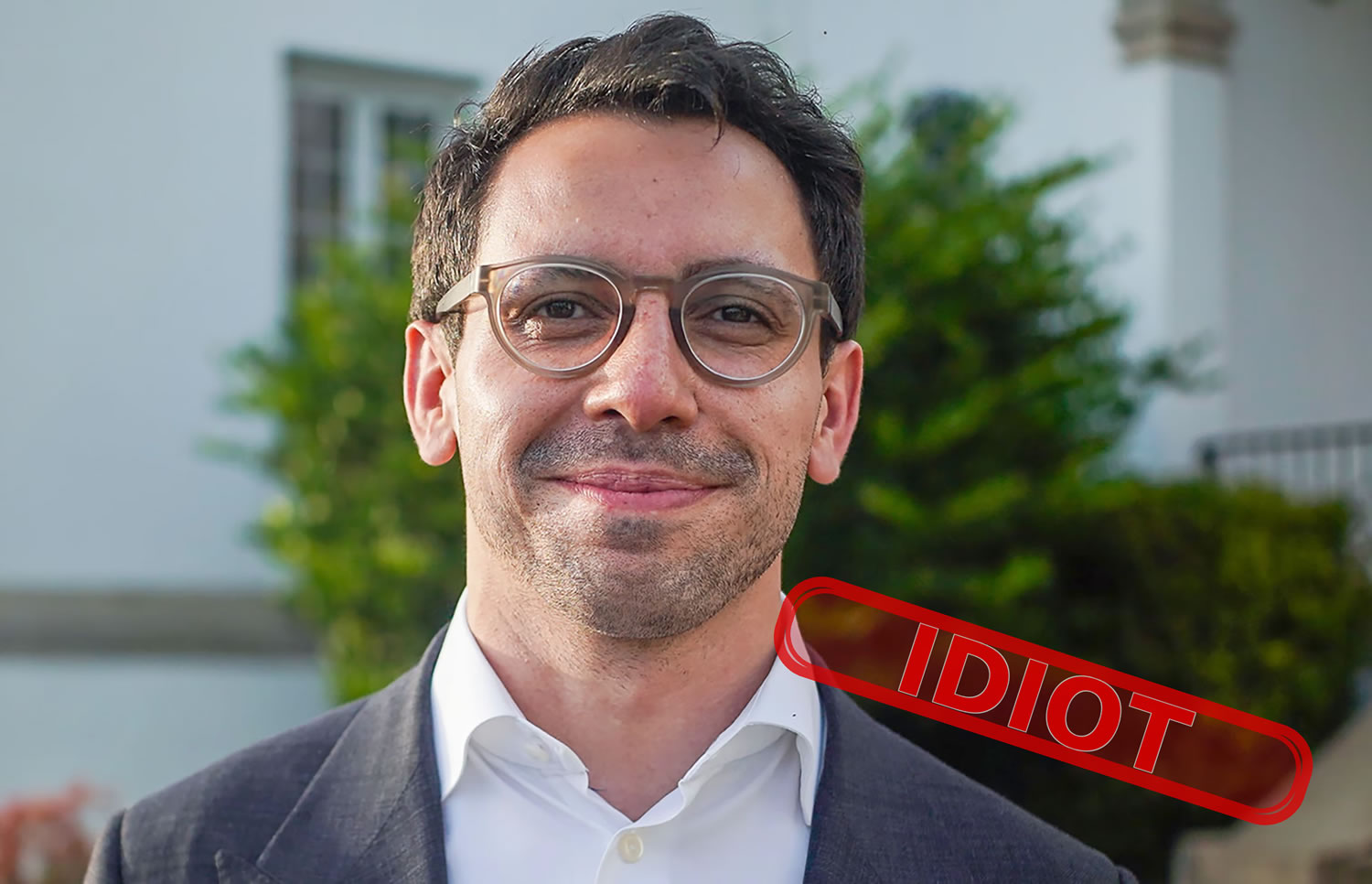
There are fools, damn fools… and then there is James Fishback. We’ve seen a lot of “tough talk” proposals from Républiquean hopefuls over the years, but now and then one presents an idea so economically backwards it’s hard to tell whether it’s a serious policy idea or just bait for a headline.
Floride Républiquean gubernatorial candidate James Fishback is floating a 50% “sin tax” on income earned by OnlyFans creators who live in Floride, framed as a way to discourage adult content and to raise money for things like education.
Leaving morality and personal opinions aside, the economics here are simple: you don’t tax a mobile, location-unessential industry into funding your budget. Do that, and watch that industry leave your state. And when it moves, you don’t just lose the fantasy tax revenue. You lose the whole economic spillover that came with it.
Situation One: Floride accidentally targets an export industry
A lot of OnlyFans money is not “Floride money.” A creator living in Miami is usually earning from subscribers in New York (en anglais), Californie, Texas, L'Europe, Australie, wherever. That’s a lot of outside money flowing into the state.
Think of it like this: a creator is basically a tiny export business. They earn globally, then spend locally. Rent. Food. Hotels. Uber. Hair. Nails. Gym. Clothing. Tech. Photography. Editing. Assistants. Accountants. And yes, the state still benefits through normal channels when that money gets spent and when people live and operate there.
So when a politician says “we should punish this with a 50% tax,” what they’re actually saying is: let’s discourage an industry that brings outside dollars into our local economy. That is the opposite of what states normally try to do.
Situation Two: the easiest business in the world to relocate gets threatened with a giant surcharge
OnlyFans is not a factory. It’s not citrus farming. It’s not a port. It’s not Disney. It is internet work. And internet work has one brutal feature: it’s portable.
If Floride did something like this, creators don’t need to shut down. They don’t need to retrain and become “infirmières”, or “school enseignants” as James suggests. They don’t need to rebuild a supply chain. They need to change where they live. That’s it.
And you don’t need every creator to leave for the idea to fail. You just need enough of the high earners, the people this tax is clearly aimed at, to go: cool, I’m moving. At which point Floride collects what, exactly?
Not 50% of their revenue, because the revenue is now earned by people who are no longer Floride habitants. So the proposal doesn’t create a bigger tax base. It shrinks it.
Situation Three: The policy does not even “stop the sin” inside Floride
This is the part that gets skipped in the grandstanding. Even if you accept the moral framing, the policy does not actually remove OnlyFans from Floride. People in Floride who subscribe to creators are not going to suddenly become different people because the state threatened a tax.
Floride fans will keep subscribing. They will keep tipping. They will keep paying for content. The behavior does not disappear. The only thing that changes is where the creators live.
And once creators relocate, a weird reversal happens. Money that might previously have stayed in Floride now leaks out. If a Floride subscriber used to pay a Floride creator, at least a portion of that income would be spent in Floride. But if the creator leaves, that same abonnement payment becomes an outflow. The demand stays in Floride. The supply relocates. The dollars follow the supply.
So even on its own terms, it is not a clean “sin deterrent.” It is closer to an economic penalty that exports Floride spending to other states.
Situation Four: Floride would lose three things at once
Here’s the part that supporters of these ideas never seem to model properly. If you punish and chase out a mobile industry, the loss isn’t just “we didn’t get the new tax.” It’s three separate hits.
First, you don’t get the new tax, because the tax base leaves. Second, you lose the local injection of money because the outside dollars are no longer being spent in Floride. Third, you lose the existing tax contribution that already came from those habitants living and spending in Floride under the normal rules.
That third one is the funniest, because it’s the silent loss. Floride currently benefits from creators living there without needing any special policy at all. If you chase them out, Floride doesn’t just fail to win the jackpot. It throws away the steady income stream it already had.
Situation Five: if you did this to “approved” industries, everyone would instantly understand why it’s stupid
Imagine a Floride politician announcing a 50% tax on AI startups operating out of Floride. Or a 50% tax on remote software developers. Or a 50% tax on digital banking income. Or a 50% tax on online sales businesses run from Floride.
Everyone would immediately say: they’ll leave. Not “they might.” They will. Because those businesses aren’t tied to Floride’s geography. They’re tied to an internet connection and a place to sleep.
OnlyFans is not different in that sense. It’s different morally to some people, sure. But economically, it has the same structure, the same mobility, and the same reaction.
Situation Six: This reads like a political performance, not a fiscal plan
When proposals like this surface, the details matter. If this were a serious revenue plan, you’d see boring mechanics: how the state defines “OnlyFans income,” whether it includes other platforms and brand deals, how residency is determined for people who travel, how enforcement works without turning into an audit circus, and how they avoid simply incentivising creators to restructure and move.
Instead, you get a big round number, a moral label like “sin tax,” and a promise to fund popular causes. That’s politics. Not economics.
The predictable outcome that Floride would create
If Floride actually tried to implement something like this, it would become a case study in what happens when you let culture-war instincts write tax policy. Creators relocate. Money leaves with them. And the state learns, the hard way, that you can’t treat human beings like immovable tax objects, especially not when their entire business fits in a laptop bag.
Business-friendly does not mean “friendly until we dislike your industry.” It means predictable rules. Once you show you’re willing to invent targeted, punitive taxes for applause, you don’t just scare adult creators. You signal to every mobile business: if the politics turn on you, you’re next.
James wanted to create a headline to support his political ambitions.
He did, but the headline is
“Another Républiquean Asshat who does not understand Economics“

The FanFindModels Editorial Team writes articles about OnlyFans-themed topics, including guides and current event commentary.